What is a watershed and why do we care about it?
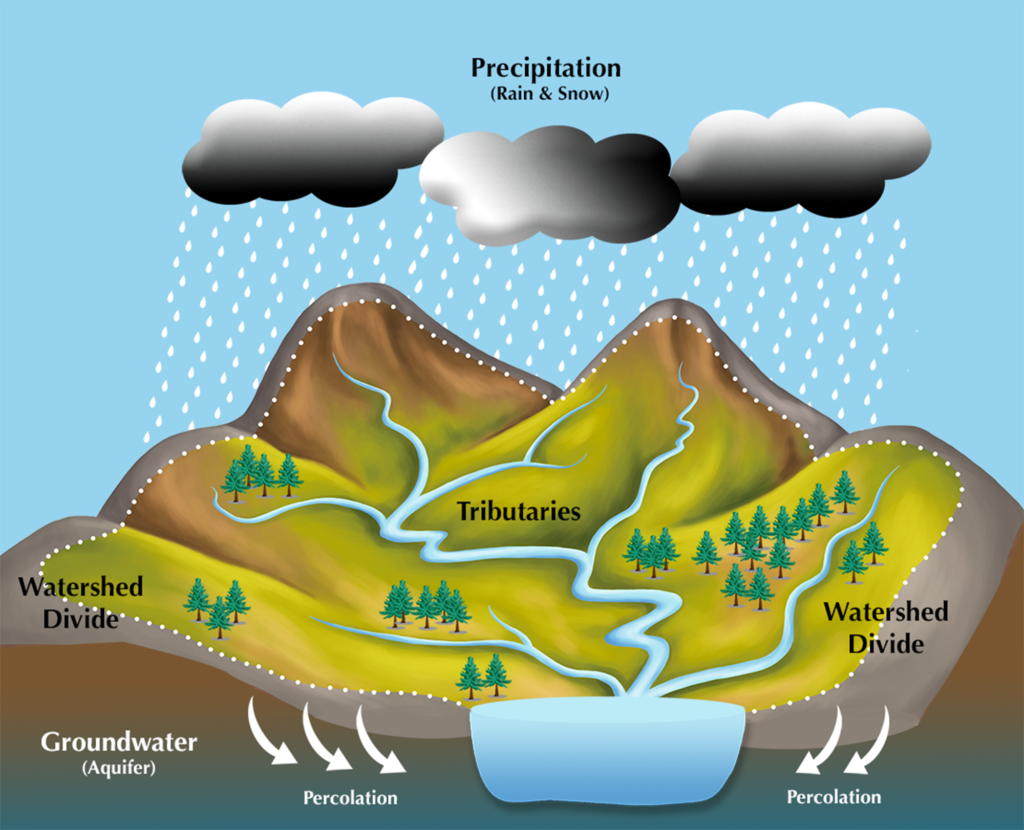
Graphic from Seacoast Science Center
A watershed is an area where all water flows into the same body of water. Rain from your yard, roofs, street, woods, and anywhere else it falls, will eventually flow into streams, ponds, lakes, rivers, and oceans. For example, most of Coles County drains into the Embarras Watershed. It may take a little time to get there, but all water in the eastern (and a lot of the southern) parts of Coles County will eventually drain into the Embarras River. The graphic below shows a breakdown of the three major watersheds in Coles County.
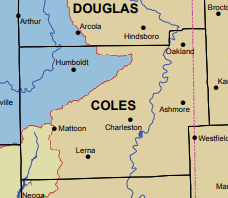
Full graphic from Illinois State Water Survey
Medium Tan (east side of county)- Embarras Watershed
Blue (north west side of county)- Kaskaskia Watershed
Light tan (south west side of county)- Little Wabash Watershed
This means that everything done in the watershed (like pesticide use in your yard, fertilizer runoff from a field, salt from the roads, etc.) will impact the river and what is downstream. On a grander scale, all of the watersheds in Coles County will eventually drain into the Mississippi river. This means that what we do here will impact the quality of water in the Mississippi river. But it isn’t just us, most of the United States will drain into the Mississippi river at some point. That means that if we do not take care of our water on a local level, it will be compounded across 100’s of counties and several states.
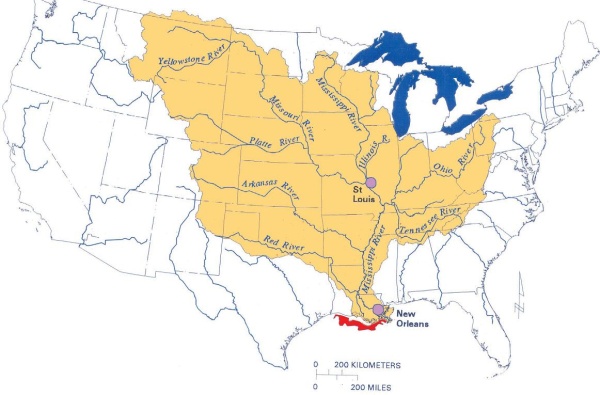
Mississippi Watershed Graphic from EPA
This may seem overwhelming, but many hands make light (or at least lighter) work. There are several organizations that are working on taking care of our local and regional watersheds, including Coles County Soil and Water.
Over the years, we have helped create several watershed plans and are currently helping the City of Mattoon get one created for the Lake Mattoon/Lake Paradise Watershed (a sub-watershed of the the Little Wabash Watershed). If you are interested in join the committee to protect Lake Mattoon/Lake Paradise, you can check out our webpage HERE.
If you would like to see what is being done on a larger scale, looking into the Illinois Nutrient Loss Reduction Strategy (NLRS) is a great way to track what is being done across Illinois to protect the Mississippi and the Gulf it flows into.
How can I help protect my watershed?
There are several ways that everyone can make a difference. This is certainly not an exhaustive list, but below are several ways you can help!
- Reduce or eliminate fertilizers and pesticides on your lawn
- Pick up pet waste
- Sweep grass clippings back into your yard if they end up on the road or sidewalk
- These are full of nutrients and can impact storm drains or water bodies
- Install a rain barrel to reduce stormwater runoff (these are restricted in some states, but encouraged in Illinois)
- Bring a bag and pick up litter on your walk
- Be mindful not to oversalt your sidewalks in winter weather
- Plants trees and native plants (we sell both in the spring)
- Never dump paint, motor oil, or medicines down the sink or storm drain
- There are many resources on how to dispose of specific materials online
- Try to choose phosphate free and non-toxic household cleaning supplies when possible
- Start/join a local volunteer group committed to cleaning up the environment
- The Embarras Volunteer Stewards are a great group in our area, but there are many more.
- You can also check local wildlife preserves including Douglas-Hart Foundation and Grand Prairie Friends
- If boating, make sure to clean your boat to prevent moving aquatic invasive species
- Educate your family, friends, and neighbors about watersheds. We can all work together!